
Canker Sore Oral Treatment
What Are Canker Sores?
Canker sores or aphthous ulcers are small ulcers in the lining of your mouth. A canker sore looks like a white or yellowish mouth sore with a red border. You usually get it at the base of your gums, on or under your tongue, or inside your lips or cheeks.
Causes Factors Of Canker Sores
- Dietary Factors: Certain foods may trigger or worsen canker sores. These include acidic fruits like citrus, strawberries, and tomatoes. Some may also experience canker sores after consuming chocolate, coffee, nuts, or spicy foods. Additionally, nutritional deficiencies, particularly in vitamin B-12, zinc, folic acid, or iron, may increase the likelihood of developing canker sores.
- Stress and Hormones: High levels of emotional stress or anxiety have an impact on canker sore development. Studies have presented a connection between stress levels and the occurrence of these mouth ulcers.
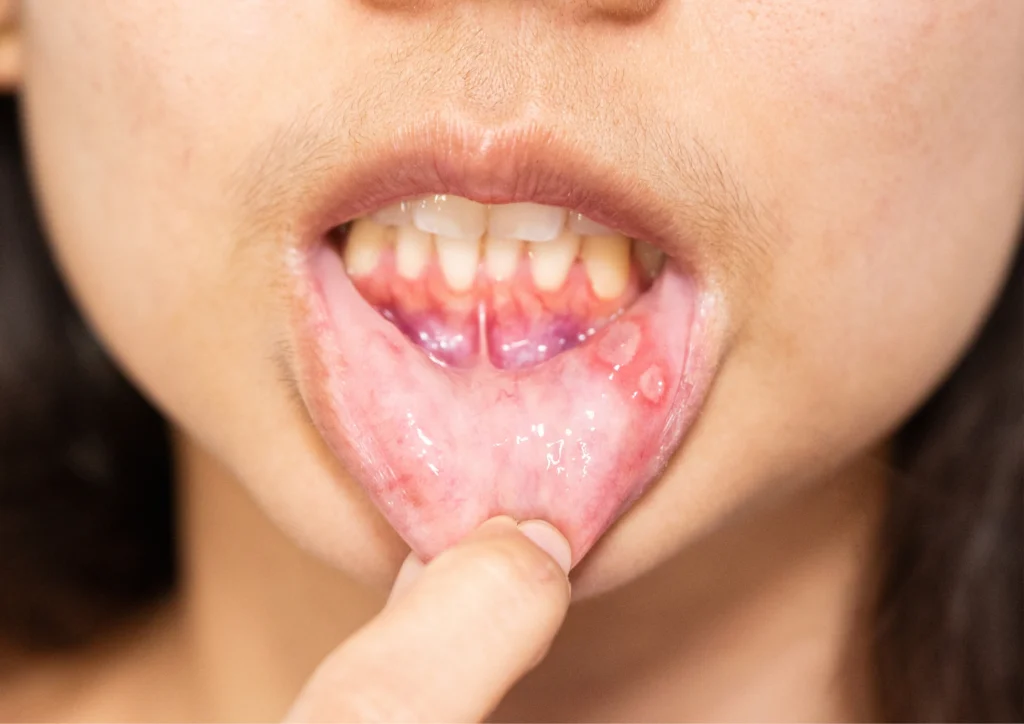
What Is A Canker Sore And Its Symptoms?
Canker sores, also known as mouth ulcers, are small, shallow lesions in the mouth’s lining. They can develop on the tongue, lip, gum, mouth roof, inside of cheeks, or under the tongue. Canker sores can be painful and can make eating, drinking, and talking uncomfortable. There are three major types of canker sores:
- Minor Canker Sores
Minor canker sores are the most common type and are typically small (less than 1 centimetre in diameter), oval-shaped, and heal without scarring in one to two weeks. They feature a white or yellowish centre surrounded by a red border. - Major Canker Sores
Major canker sores are larger (over 1 centimetre in diameter) and deeper than minor canker sores, often with a raised or irregular border. They can be extremely painful and take weeks to months to heal, and may leave a scar. - Herpetiform Canker Sores
Herpetiform canker sores can look like a herpes outbreak, but the herpes virus is not involved. They are clusters of tiny ulcers that can merge into one large ulcer. They have irregular edges and heal without scarring in about one to two weeks. These are more common in older adults.
Diagnosis Of Canker Sores
- Canker sores are often easy to identify due to their distinctive appearance and symptoms.
- Visual Examination: The doctor will closely inspect the lining of the patient’s mouth and ask about their symptoms and eating habits.
- Additional Tests: These tests may include:
- Swab Test: To detect bacterial or viral infections
- Blood Test: To identify any underlying nutritional deficiencies or health conditions
- Tissue Sample: To examine the affected area more closely
- Examination of Certain Organs: To check for related conditions like inflammatory bowel disease
Treatment For Canker Sores
-
Over-the-counter Medications:
- Topical anesthetics containing benzocaine can numb the affected area and reduce pain.
- Mouth rinses with hydrogen peroxide or chlorhexidine can help cleanse the sore and prevent infection.
- Protective gels or patches that create a barrier over the ulcer, shielding it from irritation.
- Nutritional Supplements: Doctors may prescribe Vitamin B-12, zinc, or folic acid supplements to address underlying nutritional issues contributing to canker sore development.
- Cauterisation: In severe canker sores, doctors may use a chemical substance or instrument to burn or destroy the affected tissue, reducing healing time and relieving pain.
FAQ – How Can We Help For You?
What is the canker sore treatment offered at Extraordinary Smiles and how does it work?
We offer professional oral laser therapy for canker sores (aphthous ulcers). The laser targets the affected tissue, reducing inflammation, numbing nerve endings for immediate pain relief, and accelerating the healing process. Treatment takes just a few minutes with no needles or anesthesia required. Most patients feel significant relief immediately after the procedure.
How quickly do canker sores heal with laser treatment compared to leaving them untreated?
Untreated canker sores typically heal on their own in 1–2 weeks, though the pain can be significant during that time. With laser treatment at Extraordinary Smiles, most patients experience immediate pain relief and healing within 2–4 days, a dramatic improvement in both comfort and recovery speed.
Is canker sore laser treatment painful?
No. The laser treatment itself is virtually painless; in fact, most patients feel immediate relief during and after the procedure. There are no injections, no incisions, and no downtime. You can return to normal activities, eating, and speaking comfortably right after leaving our Schnecksville office.
What causes canker sores and can dental treatment prevent them from coming back?
Canker sores can be triggered by stress, minor oral injuries (such as biting your cheek), acidic or spicy foods, hormonal changes, and nutritional deficiencies. While laser treatment does not prevent future canker sores from forming, it reliably reduces their duration and pain. Our doctors can also discuss potential triggers and lifestyle strategies to reduce the frequency of outbreaks.
Does dental insurance cover canker sore laser treatment at Extraordinary Smiles?
Coverage for canker sore laser therapy varies by insurance plan. Some plans classify it as a covered therapeutic procedure, while others consider it elective. Our front office team will check your benefits before your appointment and provide a clear cost estimate. Given the speed and effectiveness of the treatment, many patients find it well worth the investment even without full coverage.
Testimonials
⭐⭐⭐⭐⭐
⭐⭐⭐⭐⭐
⭐⭐⭐⭐⭐
⭐⭐⭐⭐⭐
Book Your Dental Visit Today
Need to see a trusted dentist? Easily schedule your appointment and choose a time that fits your busy schedule. We provide comprehensive dental care in a comfortable and modern environment.
| Richlandtown, PA | Trumbauersville, PA |
| Milford Square, PA | Spinnerstown, PA |
| Perkasie, PA | Coopersburg, PA |
| Sellersville, PA | DeSales University, PA |
| Bethlehem, PA | Emmaus, PA |
| Allentown, PA | Lehigh County, PA |
| Orefield, PA | North Whitehall, PA |
| Coplay, PA | Slatington, PA |