
Missing teeth affects more than your smile. They change the way you eat, speak, and feel about yourself in everyday situations. If you are weighing your options for tooth replacement in the Lehigh Valley, the two most common choices are dental implants and dentures – and the difference between them is significant.
This guide breaks down how each option works, what the experience is actually like, and how to figure out which one fits your life, your health, and your budget.
What Are Dental Implants and How Do They Work?
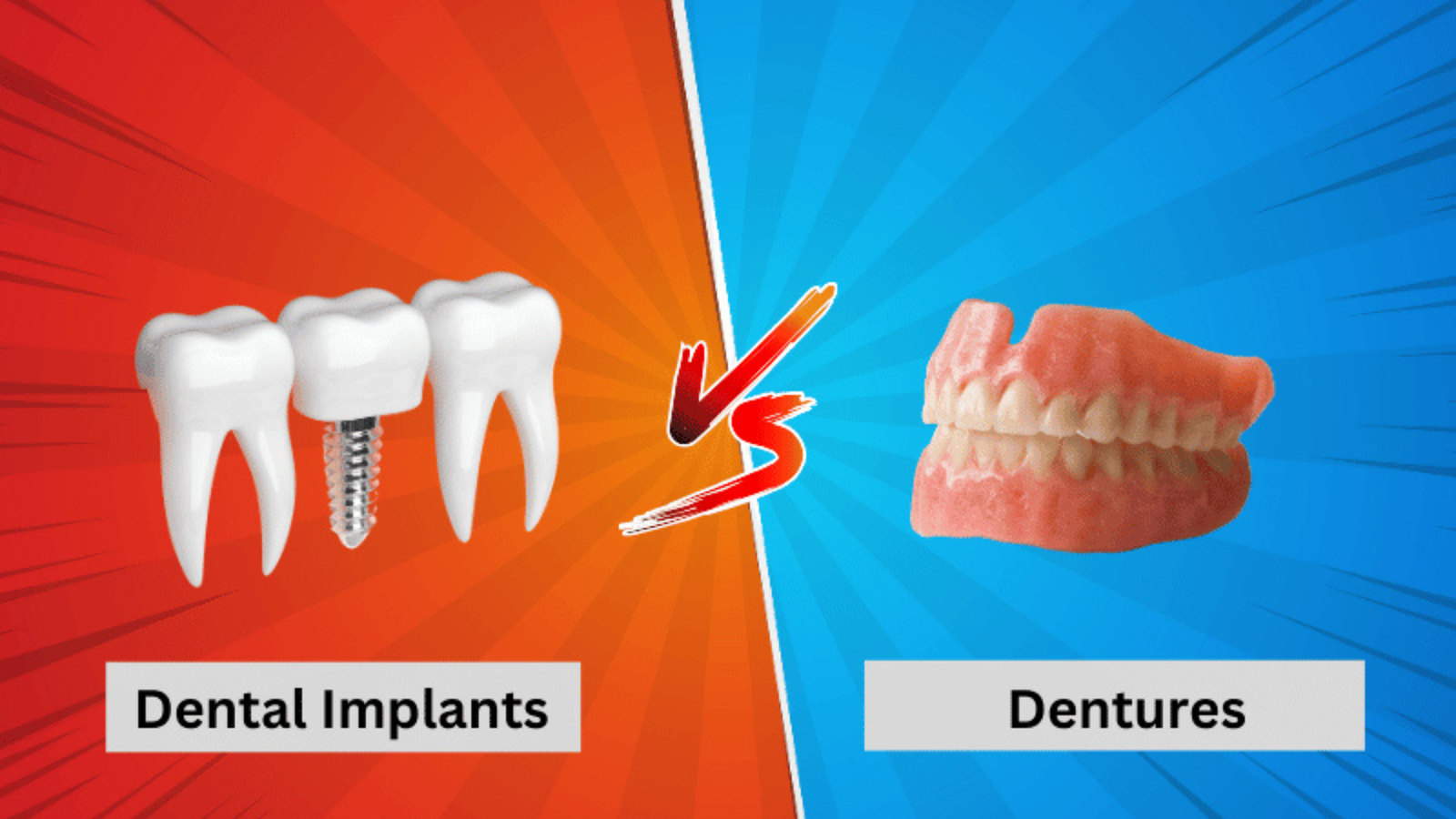
A dental implant is a small titanium post that is placed directly into your jawbone, where it acts as an artificial tooth root. Over a period of a few months, the implant fuses with the bone through a process called osseointegration. Once that bond is established, a custom crown is attached on top to complete the tooth.
The result looks, feels, and functions like a natural tooth. You brush and floss it the same way. You eat the same foods. Most people around you will never know it is not your original tooth.
At Extraordinary Smiles in Schnecksville, Dr. Sandip Ladani completed his Master’s of Dental Surgery (MDS) with a specialty in Periodontology and Oral Implantology – a level of advanced implant training that most general dentists do not have. This means implant planning, surgery, and restoration all happen under one roof with a doctor who specializes in exactly this.
What Are Dentures and How Do They Work?
Dentures are removable appliances designed to replace missing teeth. A full denture replaces an entire arch of teeth (upper or lower). A partial denture replaces a few missing teeth while the remaining natural teeth stay in place.
Traditional dentures rest on the gum tissue and are held in place by suction, natural adhesion, or denture adhesive. They are removable, which means you take them out at night to soak and clean them.
Modern dentures have come a long way in terms of appearance. A well-made set from a skilled dentist looks natural and restores much of the facial structure that collapses when teeth are lost. However, they do come with real-world limitations that implants do not.
The Key Differences: A Side-by-Side Comparison
| Feature | Dental Implants | Traditional Dentures |
| Feel | Like natural teeth | Like an appliance in your mouth |
| Bone preservation | Yes – stimulates the jawbone | No – bone continues to shrink |
| Eating ability | Full – no restrictions | Limited – hard foods are difficult |
| Maintenance | Brush and floss normally | Daily removal and soaking |
| Lifespan | 20+ years with proper care | 5-10 years before refitting |
| Cost upfront | Higher | Lower |
| Long-term value | Lower total cost over time | Ongoing costs for relines/replacements |
Why Bone Loss Is the Factor Most Patients Do Not Consider
One of the most important but least discussed differences between implants and dentures is what happens to your jawbone over time.
When a tooth root is present, it stimulates the jawbone every time you chew. That stimulation keeps the bone healthy and dense. When a tooth is lost and not replaced with an implant, the bone in that area begins to shrink – this is called bone resorption.
Dentures sit on top of the gum and provide no stimulation to the bone beneath. Over years of wearing them, the jawbone continues to shrink, which causes the denture to fit less well and changes the shape of your face. Many denture wearers notice a sunken appearance around the jaw and cheeks over time.
Dental implants are the only tooth replacement option that stops bone loss by mimicking the stimulation of a natural root.
If you are considering tooth replacement in Schnecksville or the Lehigh Valley, call Extraordinary Smiles at (610) 799-0600 to schedule a consultation with Dr. Ladani.
Who Is a Good Candidate for Dental Implants?
Most healthy adults are candidates for dental implants. Dr. Ladani will evaluate several factors during your consultation:
- Sufficient jawbone density to support the implant post
- Healthy gum tissue with no active infection
- No uncontrolled systemic conditions, such as unmanaged diabetes
- Non-smoking status or willingness to quit (smoking significantly reduces implant success rates)
If bone loss has already occurred, bone grafting may be needed before implant placement. This adds time to the process, but is routinely done at Extraordinary Smiles. Patients who were told they are “not a candidate” elsewhere are often good candidates after a thorough evaluation with a specialist.
Who Should Consider Dentures?
Dentures are a practical choice for patients who:
- Are not candidates for implant surgery due to health conditions
- Need a full-mouth restoration quickly
- Have a limited budget and cannot invest in implants at this time
- Are you looking for a temporary solution while planning for implants later
It is worth noting that implant dentures (also called implant-supported overdentures) bridge the gap between the two options. Instead of a removable denture that floats on the gum, implant dentures snap onto two to four implant posts for a much more secure fit. Extraordinary Smiles offers implant dentures as a popular middle-ground solution for patients in the Lehigh Valley who want more stability than traditional dentures but are not ready for individual implants on every tooth.
What Does the Process Look Like at Extraordinary Smiles?
For dental implants, here is a general timeline:
- Consultation and 3D imaging to assess bone and plan placement
- Implant surgery (the post is placed into the jawbone)
- Healing period of 3 to 6 months for osseointegration
- Placement of the abutment and custom crown
The surgery itself is done under local anesthesia and is more comfortable than most patients anticipate. Recovery typically involves a few days of mild soreness managed with over-the-counter pain relief.
For dentures, the process involves several appointments over a few weeks to take impressions, try in a wax model, and fit the final appliance.
Frequently Asked Questions About Implants and Dentures in the Lehigh Valley
How much do dental implants cost in PA compared to dentures?
A single implant with a crown typically ranges from $3,000 to $5,000 in Pennsylvania. A full set of traditional dentures generally costs $1,000 to $3,000 per arch. However, implants rarely need replacing, while dentures typically require relines and replacement every 5-10 years, making implants more cost-effective over a lifetime.
Can I get implants if I have been wearing dentures for years?
Yes, in many cases. Dr. Ladani will evaluate your current bone levels with imaging. If significant bone loss has occurred, a bone graft may be recommended first. This is a common and well-established procedure.
Does Extraordinary Smiles offer financing for implants?
Yes. The practice offers flexible financial arrangements and accepts most major PPO insurance plans. Call (610) 799-0600 to ask about current options.
How painful is dental implant surgery?
Most patients report that the procedure is far more comfortable than they expected. Local anesthesia keeps you comfortable throughout, and post-operative discomfort is typically mild and manageable with standard pain relief.
What is the difference between implant dentures and All-on-4?
Implant dentures use 2-4 implants to anchor a removable overdenture. All-on-4 uses four strategically placed implants to support a full arch of fixed, non-removable teeth. Both are available at Extraordinary Smiles. Dr. Ladani can explain which is appropriate for your situation during a consultation.
To schedule a dental implant or dentures consultation, call Extraordinary Smiles in Schnecksville, PA at (610) 799-0600 or visit www.extraordinarysmiles.net. Dr. Sandip Ladani proudly serves patients from Schnecksville, Orefield, Germansville, Whitehall, New Tripoli, and all of the Lehigh Valley.