
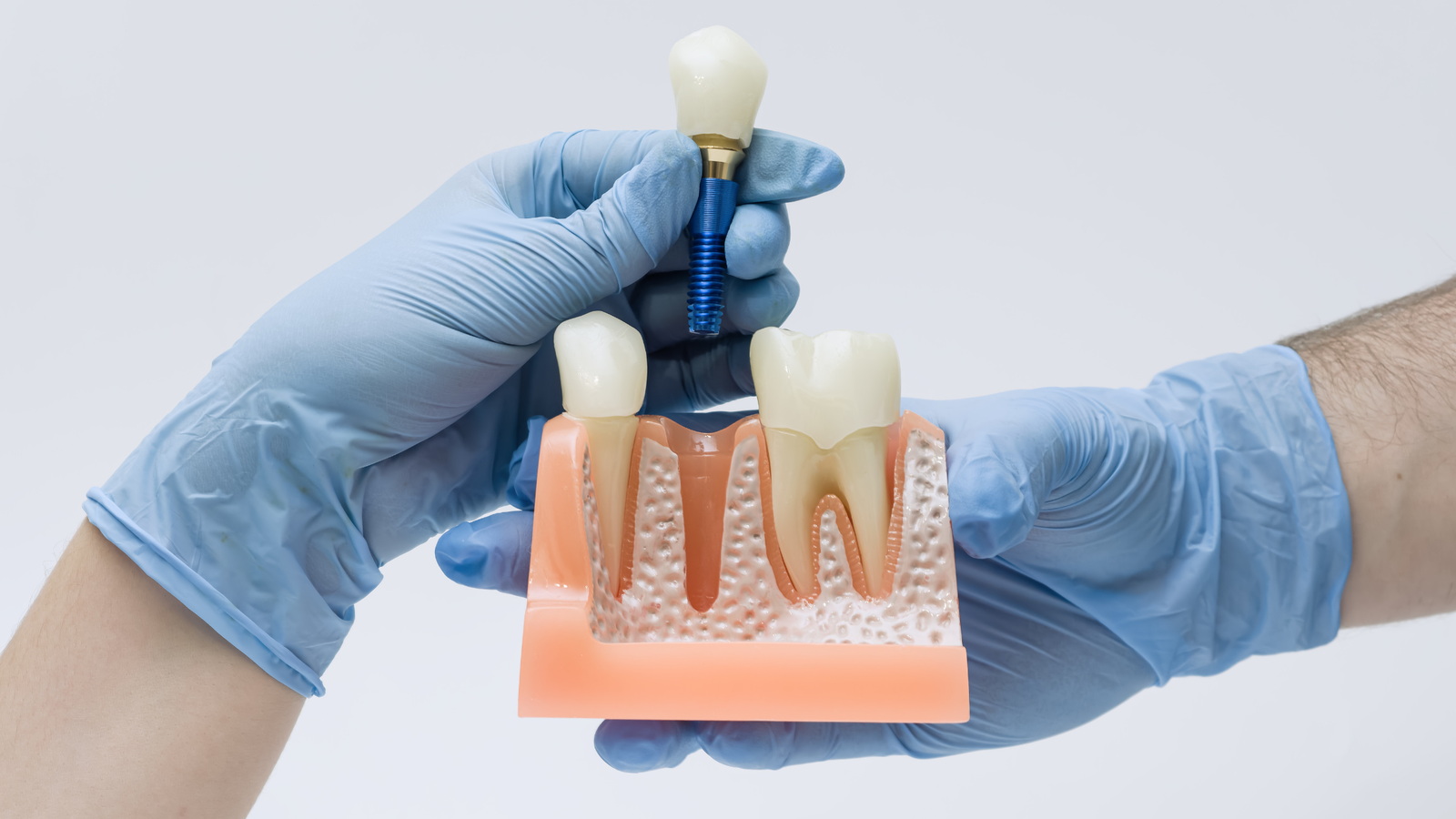
If you are considering dental implants, one of the first questions you may have is: How long does the dental implant process take?
The answer depends on your individual treatment plan.
Some patients may be candidates for immediate implant placement after a tooth extraction, while others may need to allow the area to heal or receive additional treatment first. Implant placement is also followed by a healing period before the final restoration can be completed.
Understanding the general stages can help you know what to expect when discussing dental implants with your dentist.
How Long Does the Dental Implant Process Take?
There is no single timeline that applies to every patient.
The overall process can depend on:
· Number of missing teeth
· Condition of your jawbone
· Gum health
· Whether an extraction is necessary
· Whether immediate placement is possible
· Need for additional procedures
· Type of restoration
· How your body heals
· Your individual treatment plan
A straightforward single-tooth implant can follow a different timeline from full-arch implant treatment.
The best way to determine your expected timeline is through an implant consultation.
Step 1: Implant Consultation and Examination
The process begins with an evaluation.
Your dentist will assess the missing tooth or teeth, surrounding structures, gums, remaining teeth, and overall oral health.
Imaging may also be used to evaluate your anatomy and plan implant placement.
Extraordinary Smiles uses 3D imaging as part of implant planning.
The consultation is important because it allows your dentist to determine whether an implant is appropriate and what steps may be required.
Step 2: Tooth Extraction, If Necessary
If the tooth that needs to be replaced is still present but cannot be saved, extraction may be necessary.
The timing of implant placement depends partly on the condition of the extraction site.
In certain cases, an implant may be placed immediately after extraction.
This is known as immediate implant placement.
However, not every patient is a candidate for an immediate implant.
Your dentist must evaluate the bone, gum tissue, infection status, and other factors before recommending this approach.
Step 3: Additional Treatment, If Needed
Some patients may need additional treatment before an implant can be placed.
For example, the dentist may identify insufficient supporting bone or another condition that needs to be addressed.
The exact treatment depends on your clinical situation.
This is one reason you should be cautious about implant timelines advertised online. A timeline that applies to one patient may not apply to another.
Step 4: Dental Implant Placement
Once your mouth is ready, the implant can be placed into the jawbone.
The implant serves as the foundation for the future restoration.
The number of implants and their position depend on the teeth being replaced and the treatment plan.
A single missing tooth may require one implant, while multiple missing teeth or full-arch treatment may involve a different implant configuration.
Step 5: Healing and Integration
After implant placement, the area needs time to heal.
During this stage, the implant integrates with the surrounding bone.
This process is an important part of implant treatment because the implant needs adequate stability before the final restoration can be attached.
The healing period varies between patients and treatment situations.
Your dentist will monitor your progress and determine when you are ready for the next stage.
Step 6: Final Restoration
Once the implant has healed adequately, the final restoration can be completed.
Depending on your treatment, this could be:
· A dental crown
· An implant-supported bridge
· An implant-supported denture
· A full-arch restoration
The restoration is designed to replace the visible tooth or teeth and restore function.
Extraordinary Smiles offers implant restoration for patients receiving dental implants.
Can Dental Implants Be Done in One Day?
You may have seen advertisements for “same-day dental implants” or “teeth in a day.”
These terms can refer to different treatment approaches, so it is important to understand what is actually being offered.
In some cases, an implant may be placed immediately after extraction.
Some patients may also receive a temporary restoration during part of the treatment process.
But that does not necessarily mean the entire implant treatment—from consultation through final restoration—is completed in one day.
The appropriate approach depends on your clinical circumstances.
What Makes Implant Treatment Take Longer?
Several factors can extend the overall timeline.
Bone loss
If there is not enough suitable bone for implant placement, additional treatment may be required.
Gum disease
Active gum disease may need to be addressed before implant treatment.
Tooth infection
The presence and extent of infection can affect when an implant should be placed.
Multiple missing teeth
Replacing several teeth can require a more complex treatment plan.
Full-arch treatment
All-on-4 and other full-arch solutions involve a different process from replacing one missing tooth.
Healing
Individual healing varies and can affect the timing of subsequent treatment stages.
What About Immediate Implants?
An immediate implant may be placed during the same appointment as tooth extraction when the situation is appropriate.
This can potentially reduce the number of separate surgical appointments.
However, immediate placement is not automatically the right choice.
Your dentist will consider the condition of the extraction site, surrounding bone, gum tissue, and other clinical factors before recommending immediate placement.
Extraordinary Smiles offers immediate implant treatment for appropriate candidates.
How Long Do Dental Implants Last?
The implant treatment process takes time, but the goal is to provide a long-term tooth replacement solution.
The longevity of an implant and its restoration depends on many factors, including oral hygiene, gum health, regular dental care, bite forces, general health, and maintenance.
The implant and the visible restoration are also separate components.
A crown, bridge, or denture may require maintenance or replacement over time even when the implant remains stable.
Regular dental care is therefore an important part of protecting your investment.
How Can You Prepare for Dental Implant Treatment?
You can make the process easier by preparing for your consultation.
Bring a list of medications and relevant health information, and be ready to discuss:
· How long you have been missing the tooth
· Any current pain or sensitivity
· Previous dental treatment
· Your goals
· Your concerns about the procedure
· Your desired timeline
· Your budget and financing questions
You should also ask the dental team what you need to do before and after each stage of treatment.
Questions to Ask About Your Timeline
Before starting treatment, ask:
Am I a candidate for immediate implant placement?Will I need an extraction first?Do I need additional procedures?How long will the implant need to heal?When can the final restoration be placed?Will I receive a temporary restoration?How many appointments should I expect?What could delay treatment?What should I expect during recovery?What will the complete treatment process cost?
Having these questions answered can make the process easier to understand.
Dental Implant Treatment in Schnecksville, PA
The timeline for dental implants is different for every patient.
Some patients may qualify for immediate placement, while others may need additional treatment or a longer healing period before the final restoration can be completed.
Extraordinary Smiles in Schnecksville provides dental implant treatment, immediate implants, implant restoration, implant dentures, and All-on-4 treatment for appropriate patients.
If you are considering implants, a personalized consultation can help you understand your expected treatment stages and timeline.
Frequently Asked Questions
How long does it take to get dental implants?
The total timeline varies depending on your oral health, number of missing teeth, need for extraction or additional treatment, implant healing, and type of restoration.
Can dental implants be placed the same day as extraction?
Some patients may be candidates for immediate implant placement during extraction. Your dentist must evaluate the individual site to determine whether this is appropriate.
How long does a dental implant take to heal?
Healing time varies by patient and treatment. Your dentist will determine when the implant is ready for the next stage based on clinical evaluation.
Can I get a temporary tooth while my implant heals?
In some situations, a temporary restoration may be possible. Your dentist can explain whether one is appropriate for your treatment.
Does every dental implant treatment take the same amount of time?
No. A single missing tooth, multiple missing teeth, and full-arch treatment can all involve different treatment sequences and timelines.